While reading this, I kept imaging Miss Frizzle and the Magic School Bus. This wonderful TV show had a teacher take kids on adventures, which is what Miss Moore does in our short story. I don't know why images of that kept popping in my head, but I suppose there are some interrelated concepts. The quote that Miss Moore says at the end of their day really stuck out to me. It brought back some guilty feelings about how those who are not poor really do (sometimes) spend a lot of money on expensive toys (like myself) that could be used to a much greater purpose. This story didn't make me laugh out loud and had a more serious tone than some of its counterparts, but I found it to be an enjoyable read.
Sunday, November 4, 2012
Hokum pgs 191-200 (6th response)
I thoroughly enjoyed Bambara's short story, "The Lesson." The narrator catches the readers' attention with the words, "Back in the days when everyone was old andstupid or young and foolish and me and Sugar were the only ones just right, this lady moved on our block with nappy hair and proper speech and no makeup." You can tell right away that the narrator will take us on a journey starring these two characters-Sugar and the lady, named Miss moore. The picture Sylvia (the narrator) portrays of this woman is not pleasant, to say the least. She planned "boring-ass things for us to do", had a college degree and took the liberty to teach the kids during the summer. Needless to say, they don't like her but she has a plan. Miss Moore was always telling the kids about how poor they are and how money "ain't divided up right in this country." As children, they just hear "blah-blah-blah" like she is the teacher from Charlie Brown. She proves to have a greater purpose than just taking away their pool time fun and games. She hails two cabs and hustles half of the kids in with her, asking our narrator to calculate a 10% tip for the driver. They get off on Fifth Avenue and go inside a store called F.A.O. Schwartz, but not before gazing at the beautiful toys in the window. As I realized later, the main idea of the story focuses on a "handcrafted sailboat of fiberglass" that costs $1,195. The kids are flabbergasted and in awe of the magnificent creation. The 'class' argues about who would pay that much for a toy and how you could get a sailboat set for much cheaper without comprehending that they had just learned Miss Moore's lesson. Once they get home, she asks them what they thought of the store. Sugar says, "I don't think all of us here put together eat in a year what that sailboat costs." Miss Moore is excited that someone had hit the nail on the head and prompts her further by asking, "Imagine...what kind of society it is in which some peoplecan spend on a toy what it would cost to feed a family of six or seven." She hopes that the kids finally realize the inequality of the 'democracy' they live in. Bambara leaves Sylvia on her way to the West End to 'think this day through,' suggesting that Sylvia understands, at least in part, the lesson for the day.
While reading this, I kept imaging Miss Frizzle and the Magic School Bus. This wonderful TV show had a teacher take kids on adventures, which is what Miss Moore does in our short story. I don't know why images of that kept popping in my head, but I suppose there are some interrelated concepts. The quote that Miss Moore says at the end of their day really stuck out to me. It brought back some guilty feelings about how those who are not poor really do (sometimes) spend a lot of money on expensive toys (like myself) that could be used to a much greater purpose. This story didn't make me laugh out loud and had a more serious tone than some of its counterparts, but I found it to be an enjoyable read.
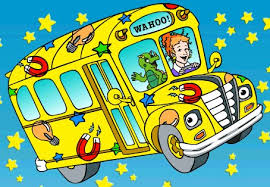
While reading this, I kept imaging Miss Frizzle and the Magic School Bus. This wonderful TV show had a teacher take kids on adventures, which is what Miss Moore does in our short story. I don't know why images of that kept popping in my head, but I suppose there are some interrelated concepts. The quote that Miss Moore says at the end of their day really stuck out to me. It brought back some guilty feelings about how those who are not poor really do (sometimes) spend a lot of money on expensive toys (like myself) that could be used to a much greater purpose. This story didn't make me laugh out loud and had a more serious tone than some of its counterparts, but I found it to be an enjoyable read.

Subscribe to:
Post Comments (Atom)
No comments:
Post a Comment